
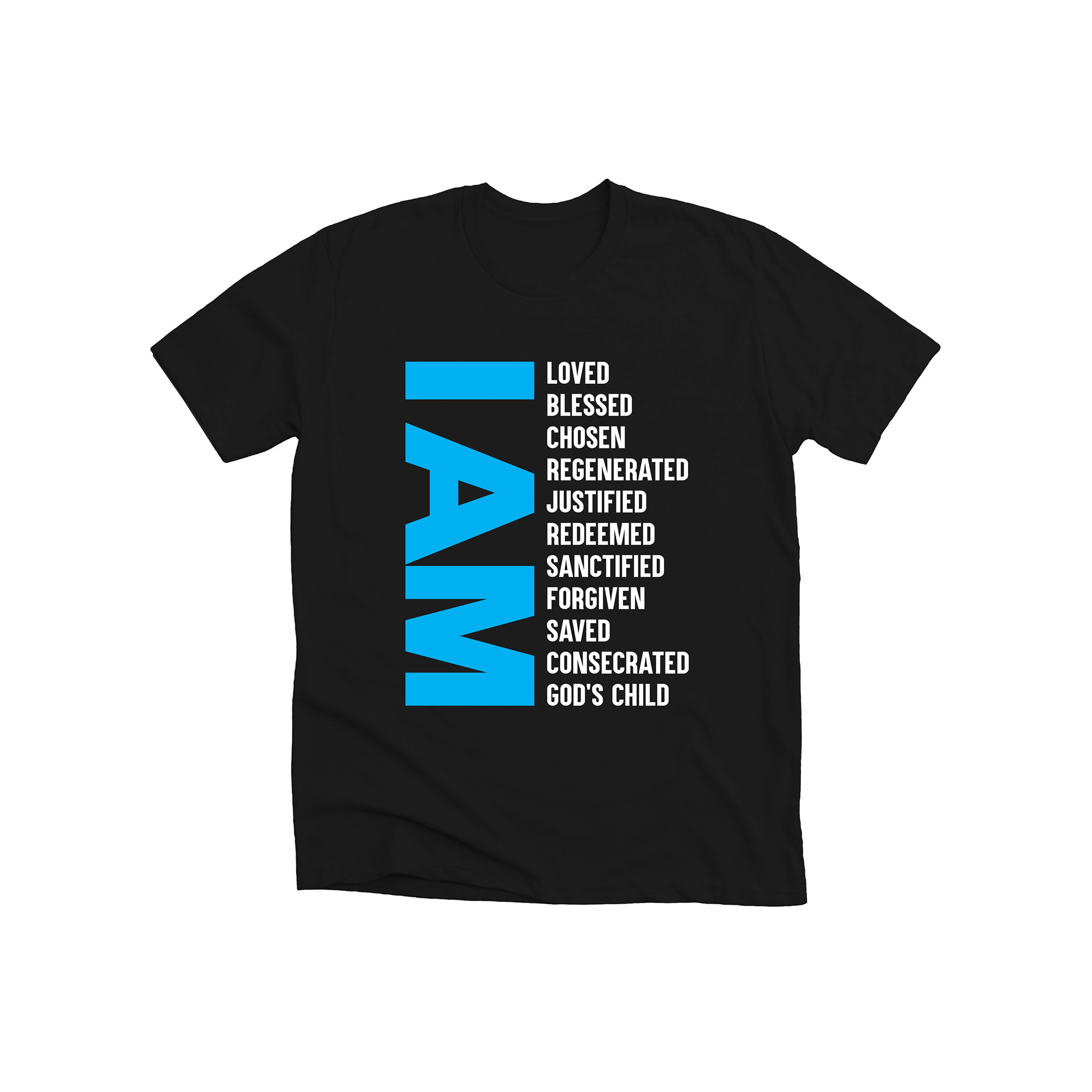
LOVED, BLESSED, CHOSEN, REGENERATED, JUSTIFIED, REDEEMED, SANCTIFIED, FORGIVEN, SAVED, CONSECRATED, GOD’S CHILD
Every sinner occupies a sevenfold position before God. He is a debtor, a condemned criminal, an enemy, a slave, defiled and unholy, dead, and a poor stranger.
Man in his sevenfold position as sinner needs the sevenfold salvation God has provided through His Son. As debtors, sinners need forgiveness. As condemned criminals, sinners need justification. As enemies of God, sinners need reconciliation. As slaves to sin, sinners need redemption. As defiled and unholy, sinners need sanctification. As dead, sinners need newness of life. As poor strangers, sinners need adoption. The seven elements of salvation that God offers man are forgiveness, justification, reconciliation, redemption, sanctification, regeneration/newness of life, and adoption.
The seven elements or doctrines of salvation are divine works; they designate the divine side of salvation. The human side of salvation is conversion, which includes repentance, faith, and baptism. The seven doctrines of salvation are works which God performs when a sinner properly enters into Christ. When a sinner accepts God’s gift of salvation through repentance, faith, and baptism, God lifts him out of the world, places him in Christ, and bestows upon him spiritual riches indicated by the seven doctrines of salvation, which are described below.
- Forgiveness
An outstanding blessing included in God’s gift of salvation is the forgiveness of sins. The forgiven sinner’s past life, regardless of what might have been included, exists no more. Bridges are burned behind him; gates of yesterdays are closed. He is dead to the past. His life history previous to conversion is considered non-existent. He is treated as if the day he became a Christian were the first day of his life.
Through divine forgiveness, man’s sins have been washed away (Acts 22:16); he has become as “white as snow” (Isa. 1:18; Psa. 51:7). His sins have been removed from him “as far as the east is from the west” (Psa. 103:12). His iniquities have been subdued, and his sins have been cast into the depths of the sea. (Micah 7:19.) They have been “blotted out” (lsa. 44:22), “sought for . . . and not found” (Jer. 50:20), cast behind God’s back (Isa. 38:17), and remembered no more (Jer. 31:34).
- Justification
The scene is the supreme court of the universe. The sinner, on his own merit, stands before his holy Judge as a condemned criminal, guilty of sin and worthy of destruction. God’s holy nature requires Him to condemn and to punish the sinner.
As an act of grace, however, God has ordered a stay in the execution of sin’s penalty – eternal death. Sinners, therefore, do not fall dead the moment they sin today. The execution of sin’s penalty has been postponed until the second death so that sinners can have opportunity to accept God’s plan of salvation. Apart from God’s grace, the total human race would have been destroyed. Through infinite love, God provided that His sinless and perfect Son, Jesus Christ, would become the sinner’s Substitute. As the sinner’s Substitute, Christ perfectly satisfied all the requirements of the law. He obeyed the law’s precepts and suffered the law’s penalty. This He did, not for Himself, but for sinners. “For he hath made him to be sin for us, who knew no sin; that we might be made the righteousness of God in him” (2 Cor. 5:21). The believer’s sin is imputed to Christ, and Christ’s righteousness is imputed to the believer.
When repentant believers receive Jesus as their Substitute, they become vitally united to Him. They enter into Christ, and Christ enters into them. The saving work that Christ performed for them is then actually applied to them. In consequence of this vital relationship with Christ, God can justly treat the sinner as if he himself had done those things which his Substitute did for him. The sinner is treated as if he himself had obeyed the law’s precepts, and as if he himself had suffered the law’s penalty.
In view of the sinner’s relation to his Substitute, God imputes Christ’s righteousness to the sinner. On the basis of this imputed righteousness, which the sinner receives through faith, God as Judge declares that the sinner is righteous in relation to the law. He is justified; he is without condemnation.
III. Reconciliation
Sinners are enemies of God. They live in opposition to God’s government. Man, in sin, asserts self in active hostility and antagonism to the Ruler of the universe. Self and God move in opposite directions. There can be no fellowship between man and God as long as man is determined to live contrary to Him. “Men are at war among themselves, and man is at war within himself because there is no peace with God.” Enemies of God need reconciliation. “When we were enemies, we were reconciled to God by the death of his Son” (Rom. 5:10). “Because the carnal mind is enmity against God: for it is not subject to the law of God, neither indeed can be. So, then they that are in the flesh cannot please God” (Rom. 8:7, 8). “And you, that were sometime alienated and enemies in your mind by wicked works, yet now hath he reconciled” (Col. 1:21).
Christ’s sacrifice provided the basis of reconciliation between God, the King of the universe, and His enemies. God is propitiated; sinners are reconciled. Sinners have peace with God through the Lord Jesus Christ. No longer are they God’s enemies; they are His friends.
- Redemption
Redemption is liberation of a slave from bondage by payment of a price. The word “redeem” is translated from three Greek words: agorazo, to acquire at the forum (Rev. 5:9; 14:3, 4), exagorazo, to acquire out of the forum (Gal. 3:13; 4:5), and lutroo, to loose by a price (Luke 24:21; Titus 2:14; 1 Pet. 1:18). God, the Redeemer, performs His work of redemption through Jesus, the Redeemer. The scene is the agora, the market place. Slaves of sin are in bondage, “sold under sin” (Rom. 7:14). God, the Redeemer, purchases slaves of sin in the market place with the precious blood of His Son, who voluntarily gave His life as a ransom price for sinners. Having paid the purchase price, the Redeemer removes the redeemed from the market place so that they will never again be exposed to sale. The Redeemer, then, sets the prisoners free; they are given perfect freedom. Out of appreciation and love for the Redeemer, the redeemed give themselves to Him as His servants. (1 Pet. 2:16.)
In forgiveness, God is Creditor; in justification, He is Judge; in reconciliation, He is King; in redemption, He is Redeemer. The debtor is in the banking house with indebtedness. The criminal is in the law court with condemnation. The enemy is in the king’s palace with enmity. The slave is in the market place under bondage. The debtor receives forgiveness; the criminal, righteousness; the enemy, peace; the slave, freedom.
- Sanctification
Sinners need sanctification. They are unholy, desecrated, polluted, and profane. (1 Tim. 1:9; 2 Tim. 3:2.) In that condition, they cannot abide in God’s holy presence nor be used in His sacred service. Like old silverware in a rubbish heap, they were made for the Master’s use, but, in their present condition, they are not suited for that purpose. They need to be separated from sin, dedicated to God, and consecrated for service.
Sanctification originates in God’s grace; it is based upon Christ’s sacrifice (Heb. 10:10, 14, 29; 13:12); and it is conditional upon man’s faith (Acts 26:18). God performs this work of sanctification through His Son, Jesus Christ. “But of him are ye in Christ Jesus, who of God is made unto us wisdom, and righteousness, and sanctification, and redemption” (1 Cor. 1:30). Christ is the sinner’s sanctification. In other words, Christ’s holiness is imputed to the believer at conversion. Through his vital relationship with Christ, the believer is holy before God. When a person enters into Christ, he stands on holy ground. He is separated from the world and is dedicated unto God. He has been sanctified; he is a saint.
- Regeneration/Newness of Life
Sinners are dead in sin. They are “dead in trespasses and sins” (Eph. 2:1, 5), “without God in the world” (Eph. 2:12), and “alienated from the life of God” (Eph. 4:18). They are dead to the spiritual realm of life. There is no redemptive contact between the sinner and God. Blind men are dead to the realm of sight; deaf men are dead to the world of sound; paralyzed men are dead to the realm of touch; sinners are dead to the things of God. The windows of the heart are closed heavenward. Sinners have horizontal existence, but no vertical life. For them, life is without a third dimension.
However, when sinners enter into Christ, they become new creatures. When Christ enters into them, they are regenerated and receive newness of life. Having established a union with Christ, believers receive a supernatural quality of life from Him – the divine life. They are on a new level of existence. Life for them acquires a new dimension; to the horizontal is added the vertical. They sustain relationships not only with men, but also with God. Life is not merely extended to the around; it is lifted to the above. Windows of heart and mind are flung open Godward, and through them enters the sunshine of God’s life, light, and love.
VII. Adoption
Adoption is that act of God in salvation wherein He, as Father, places a believer in the position of an adult son with all the privileges of legal inheritance. He who is adopted is an heir. Newness of life and adoption are linked together. Newness of life gives the nature of sonship; adoption gives the position of sonship.
As adopted sons, believers are heirs of God. “He that overcometh shall inherit all things; and I will be his God, and he shall be my son” (Rev. 21:7). “The Spirit itself beareth witness with our spirit, that we are the children of God: and if children, then heirs; heirs of God, and joint-heirs with Christ” (Rom. 8:16, 17).





Reviews
There are no reviews yet.